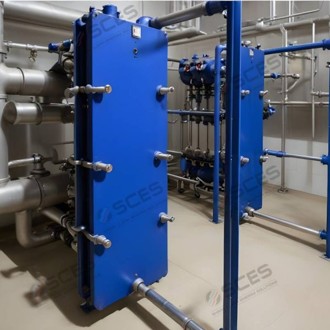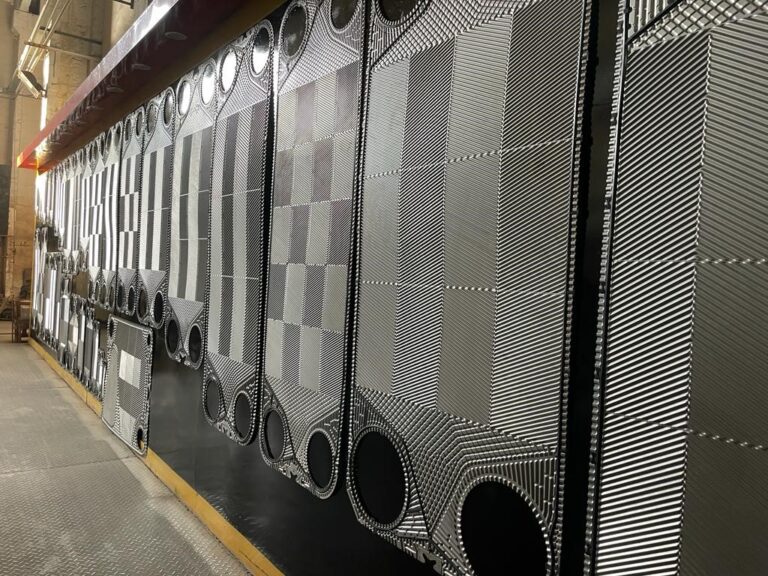
In the demanding environment of modern power generation, maximizing thermal efficiency is the ultimate goal. Plate Heat Exchangers (PHEs) are widely utilized in power plants for their compact footprint and superior heat transfer capabilities. While the corrugated metal plates usually get all the credit for conducting heat, the unsung heroes of this thermal process are the gaskets. Without these precise elastomeric seals, the entire system would fail.
Here is a closer look at how PHE gaskets are fundamentally responsible for supporting and sustaining highly efficient heat transfer in power plants.
1.Ensuring Absolute Fluid Isolation
The core principle of a plate heat exchanger relies on passing a hot fluid and a cold fluid through alternating, adjacent channels. Gaskets are responsible for creating the leak-proof barrier that strictly separates these two media. If a gasket degrades and allows cross-contamination, the temperature differential (the driving force of heat transfer) is immediately compromised, leading to a drastic drop in cooling or heating efficiency. In power plants, keeping cooling water strictly separated from critical lubricating oils or process steam is non-negotiable for system integrity.
2.Guiding Flow For Maximum Turbulence
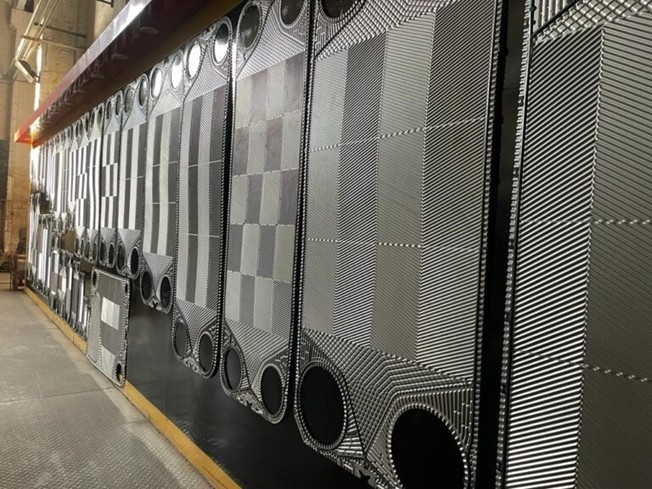
Efficiency in a PHE relies heavily on creating high turbulence within the moving fluids. Turbulence disrupts the thermal boundary layer along the plate surface, exponentially accelerating heat transfer. Gaskets are intricately designed to direct the flow path of the fluids evenly across the entire corrugated surface of the plates. By maintaining the correct channel geometry and preventing fluid bypass (where fluid takes the path of least resistance around the edges), gaskets ensure that 100% of the media is actively engaged in the heat exchange process.
3.Withstanding Extreme Thermal Cycling
Power plants subject equipment to brutal thermal cycling and intense pressures. A sudden operational spike can cause standard rubber seals to deform, while high internal pressure can cause gasket blowouts. To maintain consistent efficiency, it is crucial to work with an expert PHE gaskets manufacturer capable of engineering specialized elastomeric compounds—such as high-temperature EPDM or FKM (Viton). These advanced materials retain their critical elasticity and structural memory, ensuring the seal remains tight even under the harsh, fluctuating conditions of a power plant.
4.Reducing Costly Operational Downtime
Every minute a power plant is shut down for unplanned maintenance, it bleeds revenue. Premature gasket degradation leads to external fluid leaks and mandatory system shutdowns. Sourcing reliable, high-quality replacement components from a trusted PHE gasket supplier guarantees that you receive dimensionally accurate seals. This extends the lifespan of the equipment, stretches out maintenance intervals, and keeps the plant running at peak thermal capacity for much longer periods.
The SCES Shrao Engineering Advantage
Understanding the critical synergy between plates, fluid dynamics, and sealing technology is what separates an average system from a highly optimized one. As an experienced heat exchanger manufacturer, SCES Shrao Engineering specializes in designing and servicing robust thermal solutions tailored specifically for the heavy demands of the power generation sector. We ensure that every system is equipped with the precise gasket specifications required to maximize your facility’s thermal efficiency and safeguard against operational downtime.
Maximize Your Plant’s Thermal Performance
Do not let degraded gaskets drain your facility’s energy efficiency or threaten your critical infrastructure. Partner with experts who understand the science of thermal transfer.
Contact SCES Shrao Engineering today to consult with our engineering team about your plate heat exchanger maintenance, custom fabrication, and specialized gasket requirements!