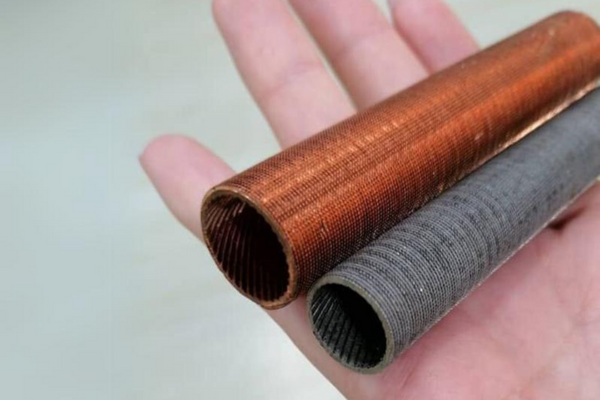
In the demanding world of industrial thermodynamics, efficiency is everything. Whether in petrochemical refineries, power generation plants, or waste heat recovery systems, the challenge often lies in transferring heat between two fluids with vastly different thermal properties—typically a liquid (like water or oil) and a gas (like air or flue gas).
Liquids generally have high thermal conductivity and heat transfer coefficients, meaning they absorb and release heat readily. Gases, however, are poor conductors. This creates a bottleneck in the heat exchange process. If you use a bare pipe, the heat transfer is limited by the “weakest link”—the gas side. This is where finned tubes become the game-changer, particularly in high-temperature applications where equipment durability and efficiency are paramount.
The Physics Of Surface Area
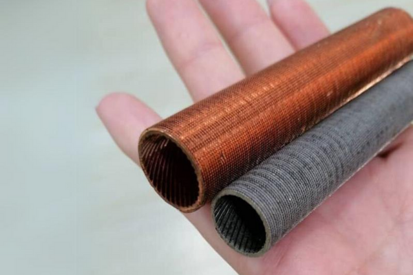
The fundamental principle behind finned tubes is simple yet powerful: increasing the effective surface area. The rate of heat transfer is directly proportional to the surface area available. By attaching fins to the exterior of the base tube, engineers can increase the surface area on the gas side by 5 to 10 times or more.
This extension balances the heat transfer equation. The fins “grab” more heat from the hot gas (or dissipate more heat into the air) to match the high efficiency of the liquid flowing inside the tube. This allows the system to transfer more thermal energy without needing to increase the overall footprint of the equipment—a critical advantage when space is expensive or limited.
High-Temperature Resilience
In high-temperature applications—such as furnace convection sections or exhaust gas boilers—standard mechanical bonds often fail. As temperatures rise, metals expand. If the fin material expands at a different rate than the tube material, a gap can form, destroying the thermal contact and rendering the fin useless.
To combat this, high-performance finned tubes (like High-Frequency Welded or Extruded fins) create a metallurgical bond between the fin and the tube. This ensures that even at temperatures exceeding 400°C to 600°C, the heat flow remains uninterrupted. This durability is why sourcing from experienced finned tubes manufacturers in India is critical; the integrity of the fin-to-tube bond dictates the lifespan of the entire unit.
Material Selection and Corrosion Resistance
High-temperature environments often come with corrosive by-products, especially in flue gases. Finned tubes can be engineered with specific alloys—stainless steel, carbon steel, or copper—to resist oxidation and sulfur attack. This customization protects the pressure vessel (the tube) while maintaining peak thermal efficiency.
Experience The SCES Shrao Engineering Advantage
When dealing with extreme heat, off-the-shelf solutions often fall short. This is where SCES Shrao Engineering excels. As one of the most trusted heat exchanger suppliers in India, we don’t just supply components; we engineer solutions.
At SCES Shrao Engineering, we specialize in manufacturing high-performance finned tubes designed for the harshest thermal environments. Our manufacturing process ensures uniform fin spacing and robust metallurgical bonding, guaranteeing that our tubes perform consistently under thermal stress. Whether you need Serrated Fins for turbulent flow or Solid Fins for fouling resistance, our engineering team customizes the design to maximize your specific heat transfer requirements.
Don’t let heat go to waste.
Optimize your thermal efficiency with equipment built to last. Contact SCES Shrao Engineering today to discuss your high-temperature application needs.