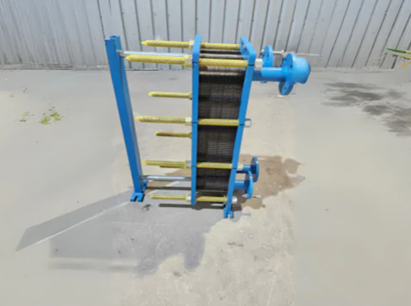
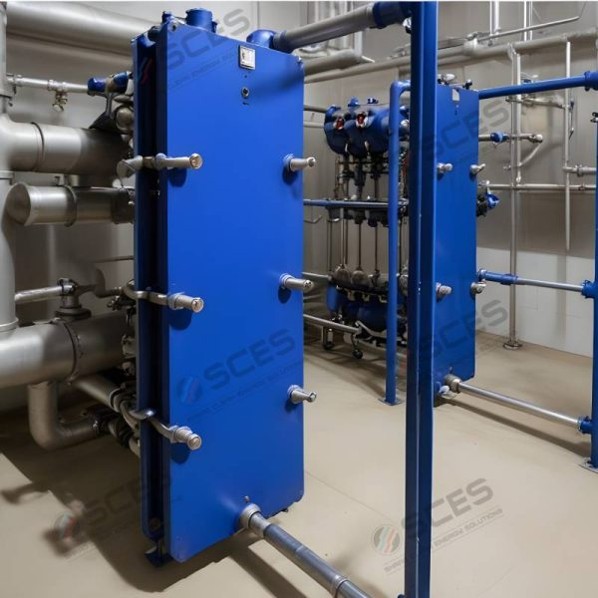
In the world of thermal management, the Plate Heat Exchanger (PHE) is celebrated for its compact size and high heat transfer coefficients. However, the true hero of this technology is often the most overlooked component: the gasket. While the metal plates conduct the heat, the gaskets control the flow. They are not merely rubber seals; they are precision-engineered components that dictate the efficiency, safety, and longevity of the entire unit.
The Role Of Gasket Profile In Efficiency
Efficiency in a PHE relies on maintaining turbulent flow within the narrow channels between plates. The gasket design plays a crucial role here. The thickness and compressibility of the gasket determine the “pressing depth” of the plate pack.
If a gasket is too hard or dimensionally inaccurate, the plates may not align correctly, altering the channel gap. A gap that is too wide reduces turbulence (lowering heat transfer), while a gap that is too narrow increases pressure drop, straining pumps. Furthermore, the gasket profile must direct the fluid precisely into the distribution area. Poorly designed gaskets can cause “dead zones” on the plate surface where fluid stagnates, reducing the effective heat transfer area and encouraging fouling.
Leakage Prevention and Cross-Contamination
The most critical function of the gasket is separating the two media—usually a hot fluid and a cold fluid. A failure here doesn’t just mean a messy floor; it can mean product contamination (e.g., coolant mixing with milk).
Advanced gasket designs utilize a “double seal” arrangement around the ports. If the primary seal fails, the fluid is directed through a drain channel to the outside of the exchanger, rather than mixing with the other fluid. This failsafe mechanism is vital for industries like food processing and pharmaceuticals. However, this design only works if the rubber compound is chemically compatible with the fluids. Using an NBR gasket for high-temperature steam, for instance, will lead to brittleness and immediate failure.
The Importance Of Quality Sourcing
Because the tolerances are so tight, the source of your spares matters. A generic rubber strip cannot replicate the complex stress-relaxation properties required for a PHE. Working with a specialized phe gaskets manufacturer ensures that the material composition (whether EPDM, Viton, or NBR) matches the original OEM specifications for elasticity and thermal resistance.
Similarly, consistency is key. A reliable phe gasket supplier will ensure that every gasket in a pack of 100 has identical dimensions. Variations in thickness across a plate pack can lead to uneven compression, warping the metal plates and causing permanent damage to the heat exchanger.
Trust SCES Shrao Engineering For Thermal Solutions
While gaskets are replaceable, the expertise required to select and install them is specialized. This is where SCES Shrao Engineering stands apart. As a dedicated heat exchanger manufacturer, we understand the unit as a complete system, not just a collection of parts.
We don’t just supply components; we analyze your operational parameters to recommend the right sealing solutions. Whether you are dealing with aggressive chemicals or high-pressure steam, SCES Shrao Engineering provides high-performance PHE solutions and support that keep your process running at peak efficiency.
Stop leaks before they stop your production.
Need expert advice on your heat exchanger maintenance or replacements? Contact SCES Shrao Engineering today to ensure your thermal systems are sealed for success.