In today’s industrial landscape, energy efficiency is no longer just a buzzword—it is a survival strategy. With rising fuel costs and stringent environmental regulations, industries ranging from power generation to chemical processing are under immense pressure to optimize their energy usage. At the heart of this optimization lies a critical piece of equipment: the heat exchanger. Far from being just simple metal boxes, modern heat exchangers are sophisticated thermal management tools that can dramatically reduce energy waste and operational costs.
Turning Waste Into Value: Heat Recovery
The most significant way heat exchangers contribute to energy efficiency is through waste heat recovery. In many industrial processes, vast amounts of heat are generated and typically vented into the atmosphere as exhaust gases or hot effluents. This is essentially burning money.
High-efficiency heat exchangers capture this “waste” thermal energy and recycle it back into the system. For instance, the heat from hot exhaust gases can be used to preheat the water entering a boiler. By raising the temperature of the feedwater before it enters the combustion chamber, significantly less fuel is required to bring it to a boil. This simple loop can reduce fuel consumption by 10-20%, leading to massive savings over time.
Optimizing Process Temperatures
Beyond recovery, heat exchangers ensure that systems operate at their optimal thermal efficiency. Chemical reactions, pasteurization, and pharmaceutical manufacturing all require precise temperature control to function correctly. If a process runs too hot or too cold, it often requires additional energy to correct the deviation or results in wasted product.
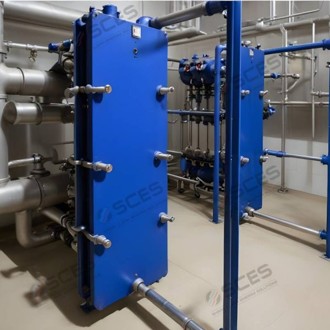
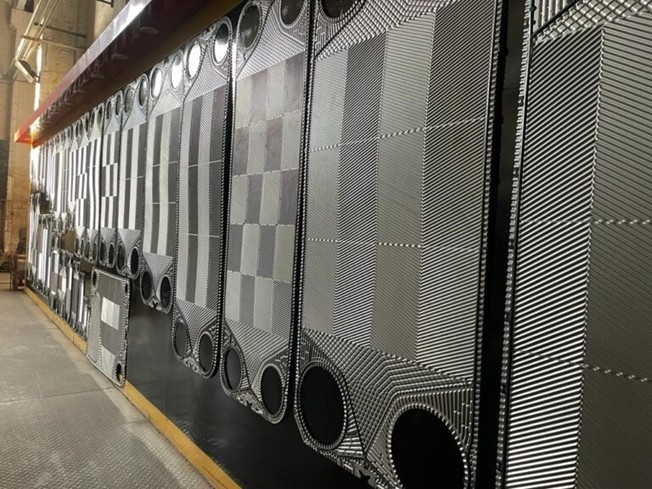
Advanced plate heat exchangers, with their large surface area and high heat transfer coefficients, allow for rapid and precise temperature regulation with minimal energy input. This ensures that the cooling or heating medium is used as efficiently as possible, reducing the load on chillers and heaters.
Reducing The Carbon Footprint
Energy efficiency is directly linked to environmental responsibility. By reducing the amount of fuel needed for heating and the electricity needed for cooling, heat exchangers directly lower the carbon emissions of a facility. This is crucial for industries aiming to meet global sustainability targets and reduce their environmental tax burdens.
Choosing The Right Partner For Efficiency
However, achieving these benefits requires more than just buying an off-the-shelf product. It requires precision engineering and a deep understanding of thermodynamics. Using an undersized or poorly designed exchanger can actually increase pressure drops and pump energy usage, negating any thermal savings.
This is why selecting the right partner is critical. As a premier heat exchanger manufacturer in India, SCES Shrao Engineering understands the delicate balance between thermal performance and hydraulic efficiency. With over 40 years of experience and ISO certification, SCES specializes in designing custom thermal solutions that maximize energy savings for your specific application.
While there are many heat exchanger suppliers in India, SCES Shrao Engineering stands out by offering a comprehensive range of high-performance solutions, including Shell and Tube Heat Exchangers, Transformer Coolers (OFAF & OFWF), and Motor/Generator Coolers (CACA & CACW). Their commitment to “Engineering Excellence” ensures that every unit is built to withstand rigorous industrial demands while delivering top-tier energy efficiency.
Don’t let your profits evaporate with wasted heat.
Ready to optimize your plant’s energy efficiency? Contact SCES Shrao Engineering today for a consultation on custom heat transfer solutions that pay for themselves!